

Ten lessons I learned from Kaziranga
ByArefa Tehsin
Jul 02, 2025 05:02 AM IST
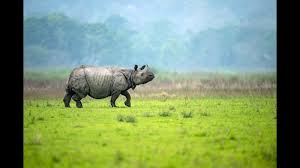
The origin of the word ‘safari’ is Kishwahili (Arabic) from ‘safar’—to travel. For a late riser like me, who hasn’t seen sunrises for many years, it can equate to ‘suffer’ too. Our days started when days had not even dawned. We’d decided to do all the five ranges of Kaziranga National Park. We had 3 days to spot honchoes of elephant herds, hornbills with their magnificent beak-dos and of course the rhinos—bouncers ready with their horns to topple your jeep. No wonder they’d like to do it. The unbridled rhino poaching for its horn resulted in Kaziranga being declared a sanctuary in mid-1900s.
Aditya, armed with his cameras, and me with my SPF50, began our safaris. From the very first morning, as we rode an elephant’s back, it turned out to be a ‘safar’ of lessons. Nothing quite puts human superiority in perspective like clinging to an elephant’s back while it nonchalantly swats away branches that could easily knock you into next week.
The first lesson learnt – Animals are not #soulsearching in the forest like you are, they are searching for food.
Here are the other life lessons:
Be Thick Skinned:
A rhino and her baby, not caring about the herds of hog and swamp deer, the two wild boars grazing nearby or our jeep inching closer, kept munching on grass, cuddling, and playing. The baby took a power nap. The mama didn’t even give those of us in the jeep, who had stopped breathing, a cursory glance, let aside asking our ‘good name’.
Lesson: Let the watchers watch and talkers talk. Being thick skinned is not just important for your survival, but sanity too.
Family is not about who you look like, but who you look out for:
As an elephant family emerged from elephant grass, we saw how the ladies were not only protecting the little ones, but also a pregnant elephant. Who would dare take panga with them? Not even the burning bright tigers.
Grass can be taller than elephants!
Oh yes, the vast swathes of ‘elephant grass’ can swallow the elephants like you get swallowed in the Black Hole of your Insta reels.
Strength Lies in Differences, not Similarities:
This Brahmaputra valley floodplain with its tall grasses, deciduous forests, shallow pools with reeds and semi-evergreen woods makes Kaziranga a beauty to behold and one of the finest wildlife refuges in the world. Four major rivers criss-cross it.
What gave it a UNESCO World Heritage status was not just the largest remaining population of one-horned rhinos, but the variety in landscape that makes it worth saving.
Be Fashionably Late:
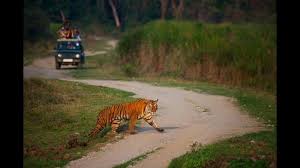
The Big Five of Kaziranga are one-horned rhino, Asian elephant, swamp deer aka Barasingha (12-points in antlers), wild water buffalo and Royal Bengal tiger. While we were able to spot the first four biggies, the last one made us wait and wait. And wait.
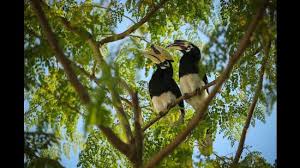
We satisfied ourselves with vultures perched at a distance, a greater adjutant standing like a Gulliver of Lilliputian birds, a great Indian hornbill with a helmet like casque feeding his wife sealed inside a tree hole (an Anarkali buried Mughal-e-Azam style). While all this was supremely fascinating, we still craved for a tiger that never showed.
Lesson: Make a grand entry only when the audience is truly desperate, or better, don’t show up at all.
Size Doesn’t Matter:
The way egrets ride a rhino’s back and keep pecking on it for delicious tics cements your belief that the world is ruled by brains not brawn, not even a “dhai kilo ka haath”.
It’s Never Late for a Comeback:
On a speaker’s bus ride from the venue at a recent lit fest in Bangalore, a translator casually asked me—why don’t you environmentalist types let the tiger become extinct if that’s what nature has prescribed? I came to know within the next ten minutes that the said translator didn’t have the same practical approach of natural selection for cats and dogs—she houses not dozens but hundreds of them at home!
Witnessing the rebounding population of the once-endangered one-horned rhino, you understand that it’s never too late for a comeback—in nature or in life—despite what the polite society may tell you.
When it Floods, Float:
The gorgeous sand banks of Bhramaputra were a reminder that destruction is the beginning of new growth.
Kaziranga floods every year. The animals don’t panic—they adapt. Rhinos swim. Elephants climb. Birds rise. It’s chaos and choreography all at once. Once the flood waters recede, they return in a rejuvenating forest. Nature doesn’t resist the flood. It rides it.
You are not as cool as you thought:
The realisation comes when you see Hoolock gibbons do pull ups, chin ups, toes-to-bar and dead hang before they even contemplate having a bite of an energy bar of insects or fruits. The most exciting encounter of our Kaziranga trip was with Hoolock gibbons, one of the rarest sightings.
Kaziranga is the last stronghold of not just the rhinos but also the only ape found in India. These small apes (6 to 9kgs) are arboreal. They need contagious forests to live in, as they swing and travel from branch to branch with hands longer than legs. The tea plantations, towns, fields, highways, mining and other human demands are fragmenting the gibbon homes. Doubly implying we are totally uncool.
Last Lesson:
Tarzan is not the main character in a forest, he is just a white ape in diapers. And so are all of us —glorified apes in designer underwear who believe in ghosts and angels.

Once we returned to Mumbai, where the trains are so spacious you can always fit one more person (horizontally!) we showed the Hoolock gibbon pics to friends. The gibbons have sexual dimorphism —the males are jet black with two prominent white eyebrows and the females are light brown. The most stunning of the animal kingdom are males. On response to this statement, a friend who didn’t know which one was what in the pics, pointed that the brown must be the male—because it was ‘fair’!
Ah…before I could react to this ‘matrimony ad’ analysis, the last lesson from the Kaziranga trip flashed in my mind—We are the ones who need saving, not the wild.
 Arefa Tehsin
Leave a comment