Between ‘pawtriots’ and protesters, finding middle ground in India’s dog war
From urban colonies to forest edges, India’s canine crisis is no longer about animals alone — it’s about us. What does a solution look like? Definitely not Facebook fights in all-caps, but a reasonable, empathetic and evidence-based approach

We are a planet divided. Not over the big philosophical questions — like, is there life after death, or why do airlines serve paneer for vegetarians in every single meal — but over dogs who delight and divide us.
Brandy Tehsin didn’t have a tail. He wagged his whole butt. In an age when having pet dogs was not in vogue, Brandy was the divo of Panchwati, our colony in Udaipur where he would do his nightly rounds. The devilish Doberman that considered not just our compound but the whole of Panchwati his kingdom, didn’t let out one bark when we had a sea of people come to pay homage on my Dadaji’s passing.
I’m not sure I fit the definition of a ‘dog person’. By that definition, I am more of a snake or crocodile person. But I know I am a person who will want to cuddle a dog and talk to it in baby voices.
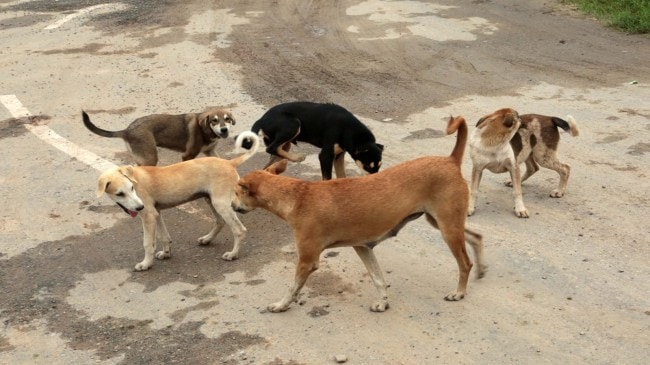
I’m also that person who thinks that unvaccinated, unsupervised, unsocialised street dogs should not be roaming in packs on our streets or edge of forests, terrorising both the skipping children and skittish blackbucks.

And that, my dear reader, is how you lose both your dog-loving and dog-loathing friends.
We are a planet divided. Not over the big philosophical questions—like, is there life after death, or why do airlines serve paneer for vegetarians in every single meal—but over dogs who delight and divide us.
At one end of the spectrum are the pawtriots, the Uber Dog Lovers. They speak fluent Barkish, wear “Dog Mom” T-shirts, and believe their furry friend’s opinion on a potential partner matters more than their own. At the other end are the Dog Dissenters, people who look at a wagging tail the way some look at their electricity bills in summers.
Between these two warring factions, there are people in the no man’s land, trying to find a balance for a creature that gives us undiluted affection, zero passive-aggressive comments and is also the cause of thousands of deaths every year in India alone.
Last year, when I was in Udaipur, the 4-year-old Reshma, who had come with her parents from M.P. to pay homage to the tomb of Mastaan Baba, was mauled by a stray dog. Her bewildered parents rushed her to hospital, but Reshma was declared dead on arrival.
India records 20,000 human deaths due to rabies annually—35% of the global total (Global Alliance for Rabies Control). The primary culprit? Free-ranging dogs. Add to that the countless cases of children, cyclists, elderly people and delivery workers being attacked or chased. Some attacks turn fatal.
One of BBC’s articles in 2016 was titled ‘Do India’s stray dogs kill more people than terror attacks?’ The fact that it is mainly the children (and adults) of the lower income groups who are affected leads to apathy in the middle and higher income groups towards this problem.
Then there’s the impact on wildlife. In protected forests and urban fringes, packs of feral dogs chase deer, kill ground-nesting birds, raid nests and occasionally even manage to bring down a leopard. One of the greatest threats to the critically endangered Great Indian Bustard is stray dogs. Dogs are now among the top invasive species globally, posing a threat to 200+ endangered species worldwide. That’s not just fur-baby trouble—it’s ecological mayhem. In the short span our lifetimes, we have seen the dog issue escalate and turn into the problem of plenty.
Modern India’s streets are today a grand buffet of garbage. And dogs, scavengers by nature, have happily adapted. These strays are not strays in the traditional sense—they’re free-ranging community animals, fed and loved by some, feared and resented by others. Add a lack of sterilisation, haphazard urban planning, an exploding garbage problem and voila! You have 60 million plus street dogs as of 2023. Twice the human population of Australia.
Humans created the conditions for this to happen. Then we did what we do best—polarised the issue.
On one side are activists who fiercely oppose any removal or culling, citing cruelty. On the other side are residents forming WhatsApp groups titled #DogMenace who paint all dog lovers as elite margarita-sipping Mogambos.
In the middle are people like Dr. Asad Rahmani, the former Director of the BNHS, who pragmatically puts it: “Every dog should be a pet dog.” A dog with a home, a name, vaccinations, a bowl and a human to love it. Dogs do not belong on the streets or forests. The only dogs that belong in the forest are Dholes, the Indian wild dog.
But this middle ground in dog politics is as rare as a clean public toilet on an Indian highway.
What does a solution look like? Definitely not Facebook fights in all-caps, but a reasonable, empathetic and evidence-based approach. Pet dogs must be registered and sterilised. It’s great if people like me want an addition to the family. But my affection shouldn’t add to a feral population. Implementing a robust circular economy to decrease urban garbage would not only keep cities cleaner but also drastically reduce the scavenger population. Ah…I know, that’s not happening anytime soon. But a strong sterilisation drive can. Sterilisation alone doesn’t solve aggression or territorial behaviour. Instead of release-and-forget, there should be more shelters and adoption centres.
Our society, like that of the west, is increasingly grappling with loneliness, scattered families and urban alienation and needs an emotional leash. There has been an upsurge in pets after Covid. Dogs are natural emotional therapists. But to need them is not to ignore the danger posed by unsupervised dogs that form packs on our streets and forest edges.
Maybe it’s time to step out of the binary. To stop barking at each other. We need better public policy, deeper compassion and honest conversations. Above all, as Dr. Rahmani says, we need fewer packs. And more pairs: a dog and their human. Watching the sunset. Maybe sharing a sandwich. Not chasing a sambar.
When Yudhishthira reached the gates of heaven, he took the dog, not the doctrine. I hope to find Brandy there too—still wagging that tailless butt, still ruling Panchwati, only now with clouds instead of compound walls. Well, most likely I am going to hell. I hope hell has a back gate and Brandy still remembers how to break through.
Tehsin is a Colombo-based writer and environmentalist
 Arefa Tehsin
Leave a comment